Hot: Skin Analyzer PDT Skin Machine Hair Growth Device Home Phototherapy

In markets where a home UVB unit costs more than a patient will pay out of pocket, rental converts a stalled sale into a monthly line item - and converts a device business into a service business, with the obligations that follow.
The maths is attractive on paper. What decides the outcome is whether the operator can get devices back, cleaned, re-issued and supported without a technician on the road every week.
A rental fleet has three numbers that matter: utilisation, cycle length and return condition. Utilisation is the share of the fleet that is out with a paying patient; cycle length is how many months an average patient keeps the unit; return condition decides how much of the next cycle's revenue is spent on refurbishment.
A price structure that survives is a one-off set-up fee covering delivery, handover and the first consumable pack; a monthly fee for the device and standard maintenance; and consumables billed at use. That split keeps the monthly number comparable with a competitor's, and it stops the programme absorbing the handover cost, which is the most time-consuming part of every cycle.
Rental agreements fail on the boring clauses. The device leaves the warehouse and comes back either usable or as a claim, and the difference is decided by what the patient signed.
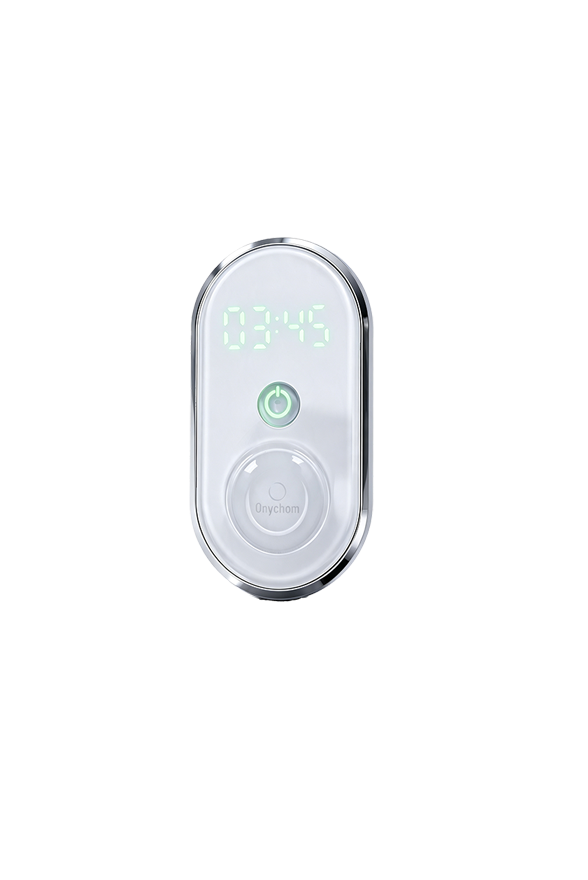
A visible countdown and a locked maximum time are what make a rented unit safe in someone else's house.
Two costs destroy rental programmes: shipping a device twice for one patient, and sending a technician to a home. Both are avoidable with a standard returnable crate, a pre-paid return label and a handover that happens at the clinic or at a partner pharmacy rather than at the patient's door.
Plan the refurbishment loop before the first unit goes out: inspection bench, spare lamps, replacement goggles in two sizes, and a written pass or fail rule so the decision is not a judgement call each time.
Renting a device is not the same as treating a patient, but the boundary needs to be explicit. In most markets the clinic prescribes the course, the patient operates the device at home and the distributor supplies and maintains it. Marketing that implies the distributor provides treatment invites a regulatory problem that a sale would not.
Start with ten units, one city and one clinic partner. Track utilisation weekly, log every return with photographs, and record the hours spent per unit per month - that last number is usually the surprise. If the programme cannot carry its own service hours at ten units, it will not carry them at a hundred.
Then decide whether to grow the fleet or to convert the best-performing patients to purchase with the rental payments credited against the price. Both are viable; doing neither is the usual outcome.

Every unit should leave through a handover, with the routine demonstrated once and the log started.
Planning a rental fleet? Ask for our returnable crate specification, damage schedule template and refurbishment bench checklist.
【Editor】admin
 Address
2nd Floor, 1-101,Building 6, Xuzhou , LIANDO U Valley, 6# Leye Road, Damiao Street, Jiangsu Province, China
 Email
info@diosole.com
 Tel/Whatsapp
+86 18914846950
 Facebook
18914846950