Hot: Skin Analyzer PDT Skin Machine Hair Growth Device Home Phototherapy

Psoriasis gets the attention because the plaques are visible and the protocol is standardised. Atopic dermatitis carries a larger patient population in most markets and a far smaller installed base of phototherapy devices.
That gap is a commercial opportunity, provided the programme is built around safety rather than throughput.
Eczema patients are often younger, their skin barrier is impaired, and their disease fluctuates. A course that works in January may be unnecessary by March. Where psoriasis protocols assume a fixed block of treatment, eczema programmes are episodic: an induction course, a taper, then standby.
That episodic pattern changes what a clinic needs. It needs fast access to a device, a short documented protocol and a clear rule for when to stop, rather than a long fixed schedule.
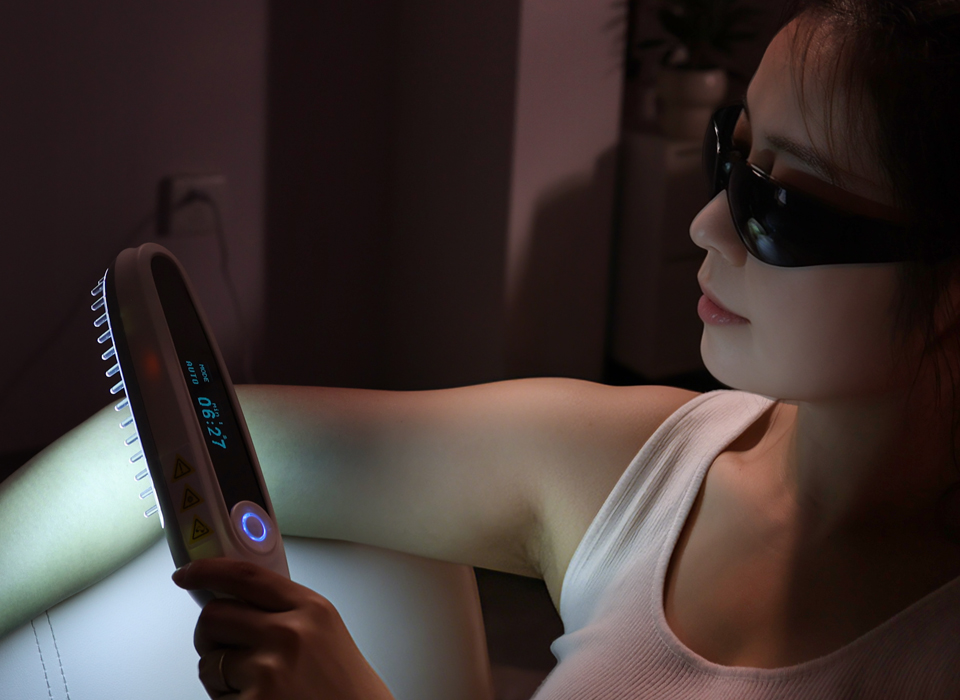
Episodic use rewards devices that are simple to restart after months idle.
Eczema patients scratch, and broken skin changes the dose question. Paediatric cases need lower starting doses and a parent in the room. Both argue for devices with fine dose steps, a visible timer and a lock that prevents a patient from editing the schedule.

Home programmes only work when the clinic retains control of the schedule.
Clinics that treat eczema need throughput flexibility: a device that can serve a paediatric case in the morning and an adult plaque psoriasis case in the afternoon. Distributors who position a single device against one indication leave that utilisation on the table.
There is also a home-care segment, but it needs more scaffolding than psoriasis: closer supervision, shorter review intervals and a stronger argument that the patient can follow a written schedule.
Building an eczema programme? Ask for our narrowband UVB protocol card and paediatric dosing notes.
【Editor】admin
 Address
2nd Floor, 1-101,Building 6, Xuzhou , LIANDO U Valley, 6# Leye Road, Damiao Street, Jiangsu Province, China
 Email
info@diosole.com
 Tel/Whatsapp
+86 18914846950
 Facebook
18914846950