Hot: Skin Analyzer PDT Skin Machine Hair Growth Device Home Phototherapy

A phototherapy course almost never runs without interruption. Holidays, infections, work travel and school terms produce gaps of two weeks to three months, and the patient returns expecting to resume where they stopped.
Resuming is the wrong word. Tolerance to ultraviolet decays during the gap, and the dose that was safe in June will burn in September if it is applied on the first session back.
The thickening of the stratum corneum and the pigmentation that phototherapy induces both regress when exposure stops. How fast depends on the patient, the skin type and how long the course had been running, which is why a re-entry rule is written as a percentage of the last tolerated dose with a clinical check, not as an absolute number.
Two patients who both stopped for four weeks can differ by a third in what they tolerate on return. The rule gets you into the right range; the first session back tells you where in that range the patient sits.
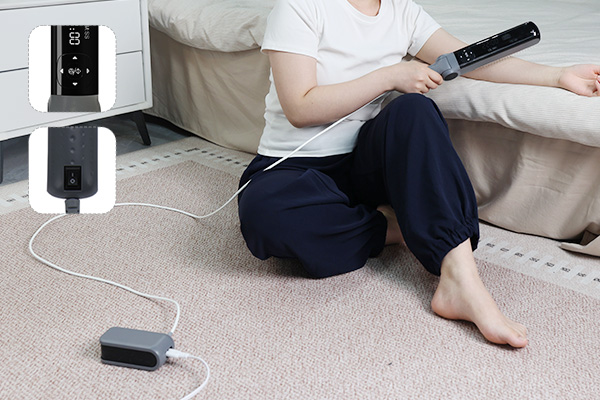
The lamp does not lose output during a patient's holiday; the skin loses tolerance.
These figures assume no erythema before the break. If the last two sessions had produced a reaction, the re-entry point moves down another step and the rebuild is slower.
The last session before a break is a poor guide on its own, because a patient who stopped precisely because of a reaction will report the reaction and forget the dose. Look at the two sessions before the gap: if both were tolerated quietly, the percentage rule applies as written; if either produced tightness or itching, treat the gap as one category longer.
This is also why the log matters more than the prescription. A patient's own note that 'it went pink on the Tuesday' is the single most useful item in the record when a course restarts six weeks later.
Nothing about the equipment changes during a patient's gap, but two things can change underneath the patient: the lamp hours keep advancing for the clinic's other users, and a lamp may be replaced while they are away. If the device was serviced or relamped, the dose conversion has to be redone rather than carried forward.
For home units, the same applies at the fleet level. A rented device that comes back, is relamped and goes out to a different patient needs its hours reset on the paperwork even though the hardware is unchanged.
Re-entry is area-specific: the trunk may resume where the hands need a longer rebuild.
Each of these is predictable, and each is cheaper to prevent with a printed re-entry card than to treat. The card does not need to be sophisticated: gap length, percentage reduction, sessions to rebuild, and the instruction to call if the skin stays pink for more than a few hours.
A treatment plan that specifies only the escalation ladder is incomplete. Add a re-entry table, a line for the last tolerated dose, and a note of who decides when the reduction applies. Then the rule survives the nurse changing jobs, which is exactly when it is most needed.
For clinics running several devices, one copy of the table beside each device is enough. For home programmes, the table belongs on the same sheet as the session log, because that is the document the patient actually keeps.
Ask for the re-entry card we ship with home units - gap length, reduction and rebuild in one table.
【Editor】admin
 Address
2nd Floor, 1-101,Building 6, Xuzhou , LIANDO U Valley, 6# Leye Road, Damiao Street, Jiangsu Province, China
 Email
info@diosole.com
 Tel/Whatsapp
+86 18914846950
 Facebook
18914846950