WhatsApp Email Us Call Us

Hot: Skin Analyzer PDT Skin Machine Hair Growth Device Home Phototherapy

Wavelength Selection Guide: 308, 311, 365, 415, 633 and 830 nm Compared

Source: Diosole Animal Healthcare | Release Date:2026-10-29

Most procurement mistakes in phototherapy start with a wavelength written on a marketing page rather than measured on a test report.

This guide maps the six bands that appear most often in distributor catalogues to the device formats that actually deliver them.

Reading a wavelength claim

A number alone is not a specification. Ask for the measured peak, the full width at half maximum, and the irradiance at the working distance for that channel. A unit claiming 311nm with a 40nm bandwidth is not the same product as one with a 2nm bandwidth, even if the peak matches.
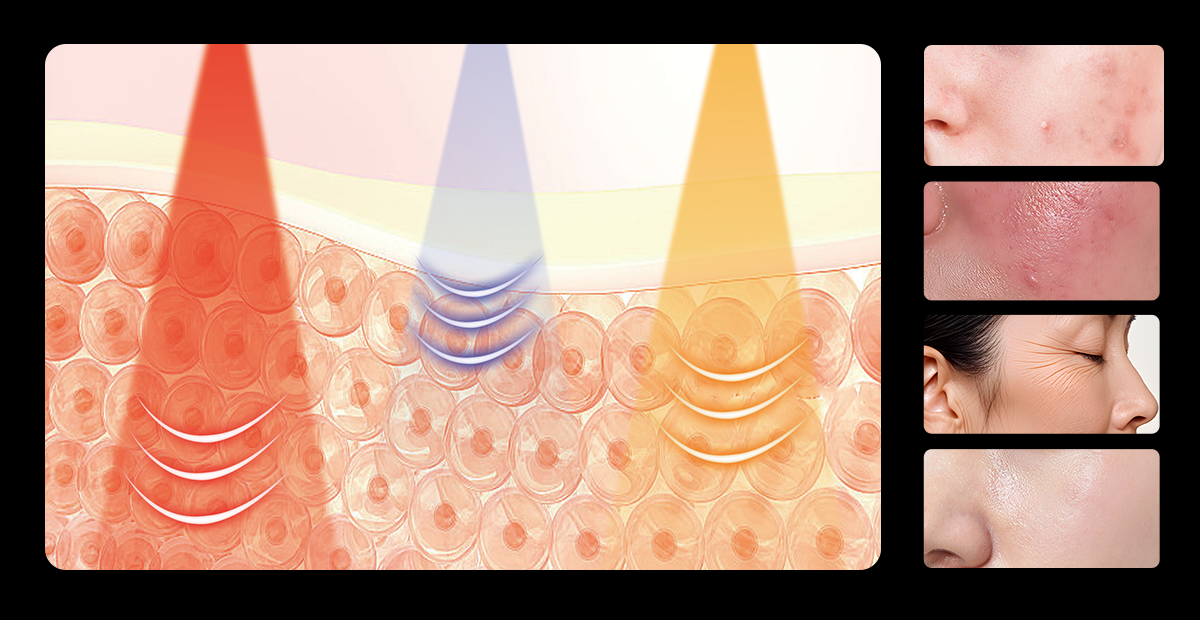
Skin layer diagram used to explain penetration depth

Penetration depth follows the band; the band follows the measured spectrum, not the label.
The bands and what they are for

  • 308nm (excimer): targeted treatment of localized plaques and vitiligo patches; handheld or spot formats; precision matters more than coverage.
  • 311nm (narrowband UVB): the workhorse for generalized psoriasis and vitiligo; panels and cabins; bandwidth and uniformity decide quality.
  • 365nm (UVA): diagnostic use and specialized protocols; Wood's lamp formats for examination rather than treatment.
  • 415nm (blue): inflammatory acne; short sessions, small footprint, no consumable.
  • 633/660nm (red): superficial photobiomodulation; panels for face and body.
  • 830/850nm (near-infrared): deeper tissue targets; invisible output, so labelling and eye protection are stricter.
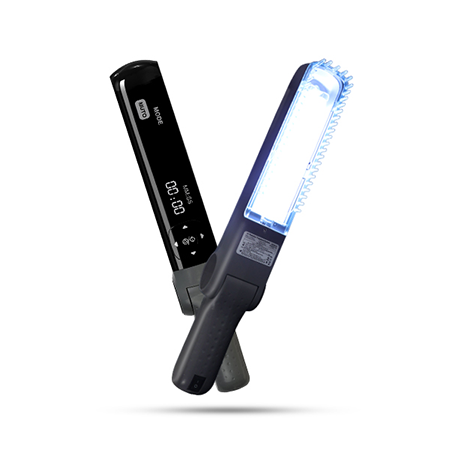
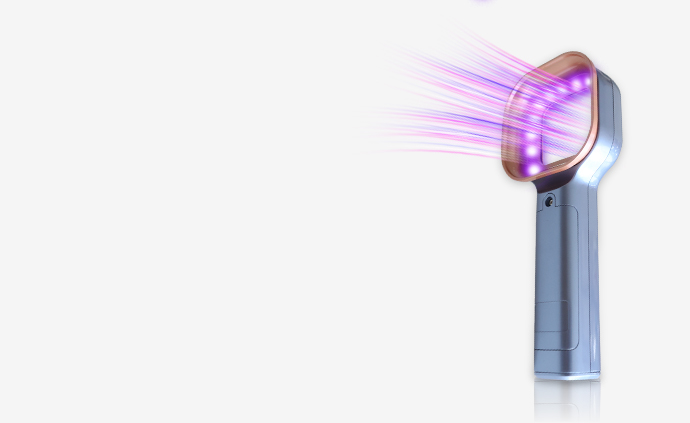
Wood's lamp emitting UV for diagnostic examination

Diagnostic UV formats look similar to treatment devices but are specified for examination, not dose delivery.

Matching band to format

  • Narrow bands suit targeted formats; broad bands suit panels and cabins.
  • Two channels in one housing save floor space but need separate control, or the dose claim becomes meaningless.
  • Invisible bands require an indicator lamp and a clear label stating the light is on.

Procurement pitfalls

Three recurring problems: a datasheet band that the test report does not list, a channel that dims when both are on, and a manual that describes one configuration while the carton holds a variant. Each is avoidable with a one-page specification signed by the supplier.

FAQ

Which band should a new distributor start with?
311nm narrowband UVB, because it covers the largest installed base and the widest patient pool. Add targeted 308nm as the second line.
Can one device cover blue and red?
Yes, combination panels are common, but confirm each channel has its own measured irradiance and that running both does not reduce either.
Does bandwidth really matter?
For narrowband UVB it matters a great deal; a wide band includes wavelengths that add risk without adding clinical value.
How do I verify a wavelength claim?
Ask for the spectral measurement from the test report, with the instrument and the date. If the supplier cannot produce it, treat the claim as unverified.

Diosole publishes measured spectra and irradiance data for each channel in its phototherapy range, from 308nm targeted units to 830nm near-infrared panels. Request the wavelength specification pack.

【Editor】admin

Latest News

  • Address

    2nd Floor, 1-101,Building 6, Xuzhou , LIANDO U Valley, 6# Leye Road, Damiao Street, Jiangsu Province, China

  • Email

    info@diosole.com

  • Tel/Whatsapp

    +86 18914846950

DIOSOLE  | All-in-one Dermatology Phototherapy Solution Manufacturer微信Facebook
18914846950