Hot: Skin Analyzer PDT Skin Machine Hair Growth Device Home Phototherapy

Distributors usually start with one model and discover, a year later, that their catalogue needs three: a clinic unit, a home unit and something portable for the patient who travels.
The YK-6000 range was designed around that sequence. The models differ in housing, treated area and positioning; they share the lamp platform, the controller logic and much of the spare-parts list.
A distributor carrying unrelated devices carries unrelated spare parts, unrelated training and unrelated failure modes. A family reduces all three: one lamp type across models, one set of dose tables, one service procedure for the common faults.
It also changes the sales conversation. Instead of defending one price point, the catalogue answers three budgets from the same technical base, and a clinic that outgrows a home unit has an obvious upgrade path.
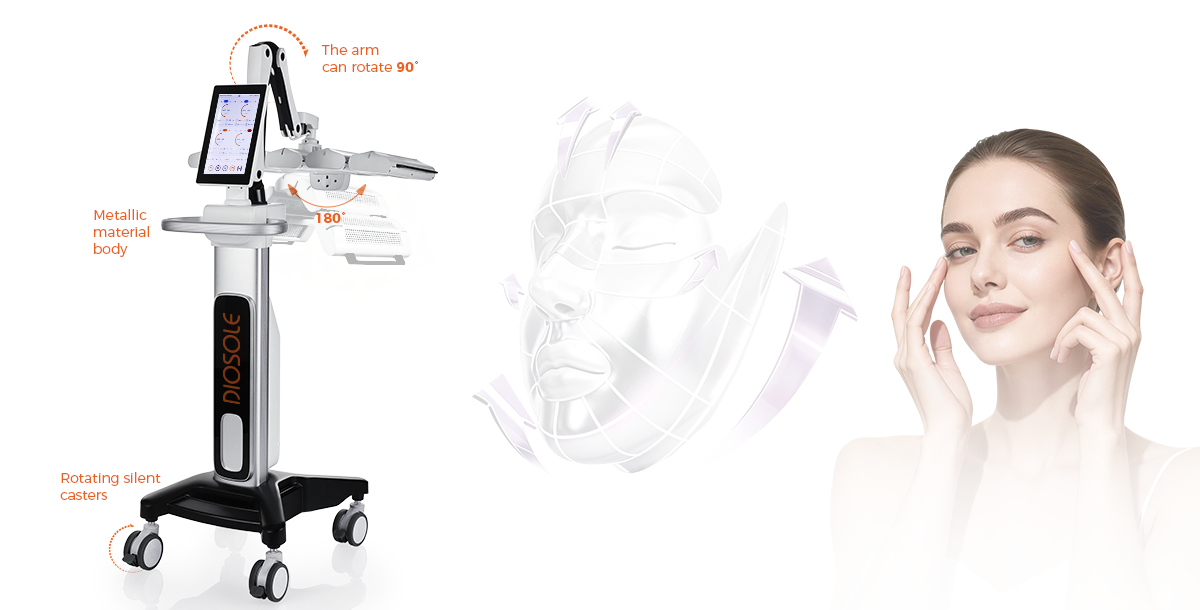
One optical platform, several housings: the same engineering logic in a clinic and a home format.
The differences that matter to a buyer are the treated area, the mounting and the dose range. The differences that do not matter - housing colour, badge, carton printing - are the ones easiest to customise for a private label.
Similar-looking models can carry different certificates, different lamp suppliers and different irradiance. Ask three questions for every variant you intend to list.
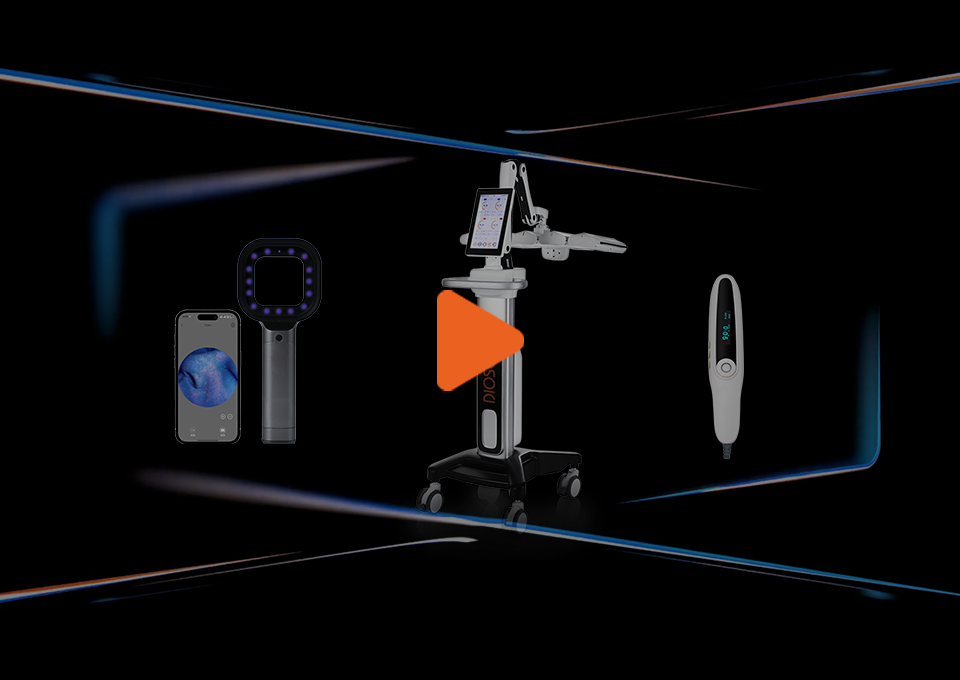
Stocking the family rather than the flagship lets one account be served at three price points.
The usual mistake is to sell the cheapest model to every small clinic, which leaves the clinic unable to treat the areas that bring patients back. The better pattern is to qualify by body area first, then price: a scalp-heavy list needs a comb regardless of budget, and a generalised list needs a body unit regardless of budget.
Home and clinic formats also serve different buyers, so a catalogue that separates them by use case rather than by price avoids the internal comparison that stalls orders.
A brand that wants its own badge usually does not need a new optical design. Changing the label, the manual, the carton and the treatment card while keeping the lamp platform and controller is the fastest route to a differentiated product, and it keeps the spare-parts list common across the range.
The parts that must change together are the label on the device, the label on the carton, the model code in the technical file and the certificate. A mismatch between any two of them is the most common documentation failure in private label orders, and it tends to surface at customs or at registration rather than at production, which is the worst possible time to find it.
Packaging deserves the same attention as the label. Optical assemblies travel better in rigid foam than in loose fill, and a crate the clinic can reuse for a service return saves the distributor a box on every repair.
One training session can cover the range if the controller logic is consistent, and that is the practical advantage worth selling: a clinic that buys a second model does not retrain its staff. Keep a single service manual with model-specific pages rather than one manual per device.
For private label projects, the family structure also reduces tooling: a new brand usually needs new labels and packaging, not a new optical design.
Keep a small stock of the parts that fail first - lamps, drivers, goggle straps, comb guards - at the distributor rather than at the factory. A five-day factory shipment becomes a three-month customer problem when the clinic's appointment book is full.
Ask for the YK-6000 family sheet with model comparison, lamp list and spare-parts matrix for your market.
【Editor】admin
 Address
2nd Floor, 1-101,Building 6, Xuzhou , LIANDO U Valley, 6# Leye Road, Damiao Street, Jiangsu Province, China
 Email
info@diosole.com
 Tel/Whatsapp
+86 18914846950
 Facebook
18914846950